
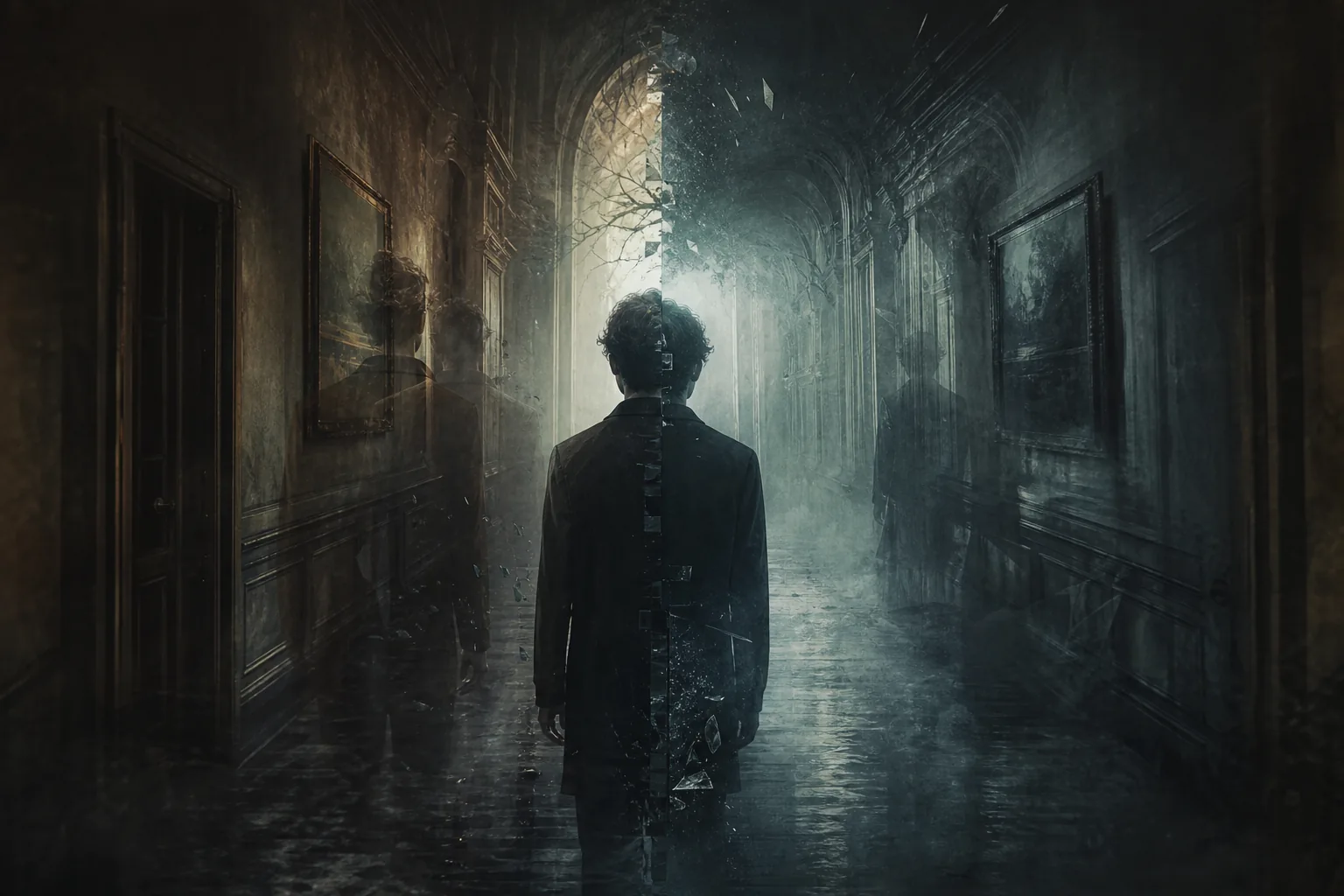
Have you ever been completely certain about a fact, only to discover that reality disagrees, and that thousands of other people remember it your way too? That unsettling feeling has a name. It is called the Mandela Effect, and it is one of the strangest entries in our whole collection.
Where the Name Comes From
The term was coined by paranormal researcher Fiona Broome around 2009. She discovered that she, along with a surprising number of other people, vividly remembered Nelson Mandela dying in prison in the 1980s. They recalled news coverage and even his widow’s speech. In reality, Mandela was released in 1990, went on to become president of South Africa, and died in 2013.
How could so many people share such a specific and detailed false memory? Broome suggested the explanation might lie beyond ordinary psychology, and the idea quickly spread across the Internet.
The Most Famous Examples
Once you start looking, the examples pile up. Many people are convinced the beloved children’s book series is spelled “Berenstein Bears,” when it has always been “Berenstain.” Countless fans quote the line “Luke, I am your father” from Star Wars, even though the actual line is “No, I am your father.” People remember a cornucopia in the Fruit of the Loom logo that, according to the company, was never there.
Then there is the cartoon Monopoly mascot, whom huge numbers of people picture wearing a monocle. He has never worn one. And many recall a 1990s film called Shazaam starring a comedian as a genie, a movie that, by every record, does not exist. Each of these is small, but together they are oddly disturbing.
The Parallel Universe Theory
For believers, the explanation is genuinely cosmic. They argue that these shared memories are real, and that we have somehow slipped from one version of reality into another. In this view, the timelines have merged or shifted, and our memories are the last echoes of the world we came from.
Some tie this to ideas borrowed loosely from physics, such as the many worlds interpretation of quantum mechanics, which proposes countless branching realities. Others suggest a more sinister cause, that history itself is being quietly edited and the glitches are slipping through. It is a thrilling idea, even if the science does not actually support it.
What Psychology Says
Memory researchers have a less dramatic but well supported answer. Human memory is not a recording. It is a reconstruction, rebuilt a little differently every time we recall something, and it is remarkably easy to nudge. Psychologists have shown for decades that people can be confidently certain of events that never happened, a phenomenon known as false memory.
The shared nature of these errors makes sense too. Our brains fill gaps with what seems most logical. A genie movie starring a famous funnyman feels plausible because a similar film about a genie did exist. A monocle suits a fancy top hatted mascot. And once one person posts a false memory online, suggestion does the rest, spreading and reinforcing it until thousands are sure. This is sometimes called confabulation working at the scale of a crowd.
Our Verdict
The Mandela Effect is real in the sense that the shared false memories genuinely exist and are genuinely widespread. What it almost certainly is not is evidence of shifting timelines. It is a vivid demonstration of how flawed, suggestible, and social our memories really are.
That said, it is one of our favourites, because anyone can experience it for themselves. Go and look up the Monopoly mascot. We will wait. The little jolt you feel is the whole mystery in a nutshell.