
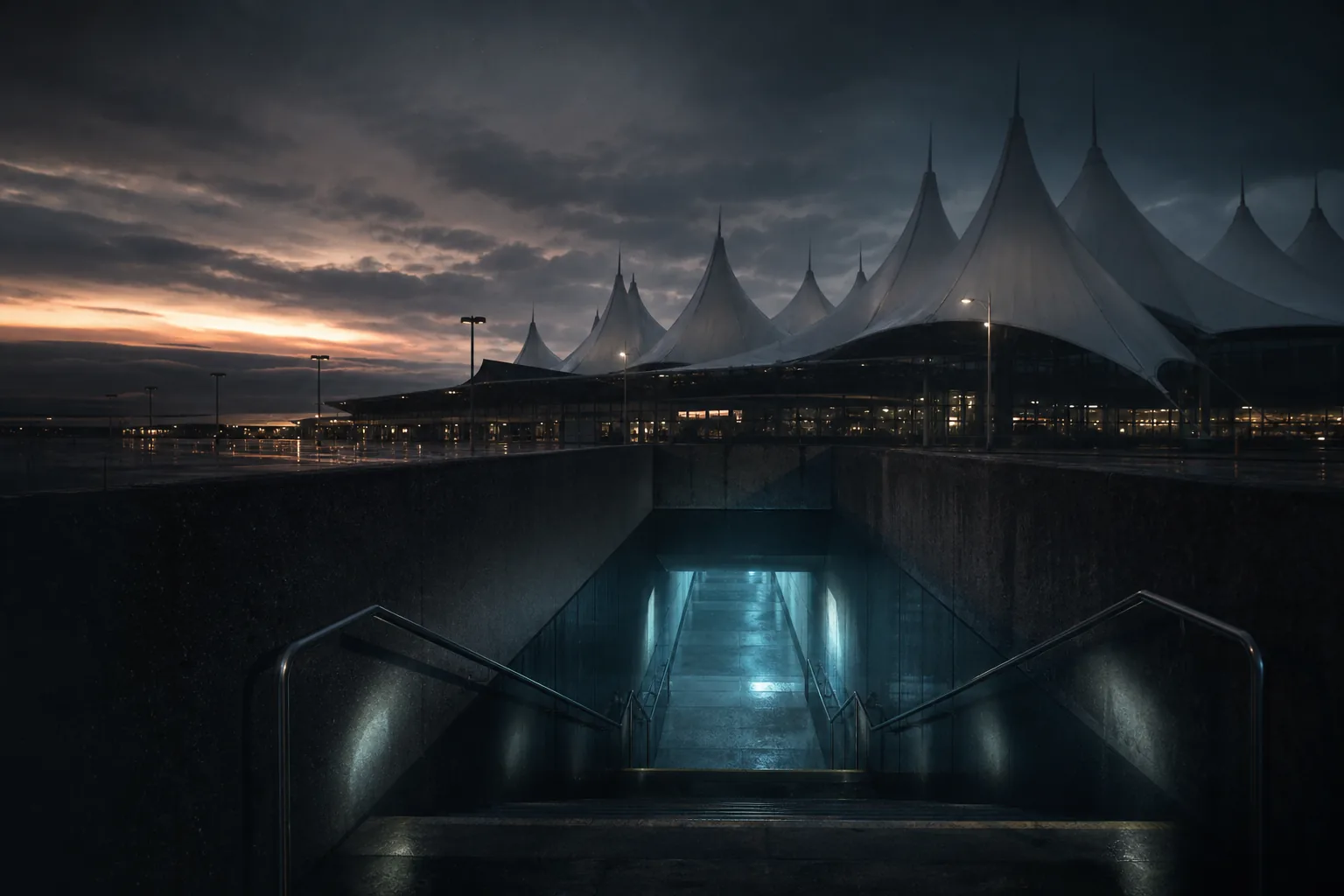
Most airports are forgettable. Denver International is not. Since it opened in 1995, this sprawling Colorado hub has attracted a remarkable amount of conspiracy theory, thanks to a strange mix of unsettling art, odd design choices, and a famously troubled construction. Let us explore why so many travellers feel a chill walking through it.
A Troubled Beginning
The airport got off to a suspicious start. It opened sixteen months late and ran roughly two billion dollars over budget, an overrun that demanded explanation. It was also built far from the city on a huge plot of land, much larger than the airport seemed to need. To skeptics, the obvious question was simple. What was all that extra money and space really for?
The official answers, a notoriously broken automated baggage system and the practical need for room to expand, have never fully silenced the doubts.
The Murals
Nothing fuels the theories more than the artwork. A series of large murals by artist Leo Tanguma greeted visitors for years, and they are genuinely striking. One panel depicts a towering soldier in a gas mask holding a sword and a rifle, looming over weeping mothers and dead children. Another shows children of the world gathering around to dismantle weapons.
The artist has explained that the murals tell a hopeful story, a journey from war and environmental destruction toward peace and healing. But out of context, the apocalyptic imagery looks ominous, and theorists read them as a coded preview of plagues, genocide, and a coming new world order.
Blucifer and the Dedication Stone
Then there is the horse. A thirty two foot tall blue mustang statue rears up outside the terminal, its veins bulging and its eyes glowing red. Locals nicknamed it Blucifer, and the nickname stuck for a dark reason. During its creation, the sculpture actually fell on its maker, Luis Jimenez, and killed him. A demonic blue horse that claimed its own artist is exactly the kind of detail conspiracy theories are made of.
Inside, a dedication stone references something called the New World Airport Commission, an organisation that does not appear to have existed under that name. The capstone also bears Masonic symbols and a time capsule, which has led many to connect the airport to the Freemasons and the Illuminati.
The Tunnels and the Bunker Theory
The most enduring claim concerns what lies beneath. The airport does have a large underground system, originally built for that failed baggage network and now used for service tunnels. Theorists insist it goes much further, describing a vast bunker complex meant to shelter the global elite during an apocalypse, or even a secret base for more exotic purposes.
The airport, to its credit, has leaned into the fun. It has run official campaigns joking about lizard people and underground tunnels, even building a marketing event around its own legends. Whether that openness calms the theories or feeds them is a matter of taste.
Our Verdict
Denver International Airport is a wonderful example of how a cluster of unusual but explainable details can combine into something that feels deeply sinister. A troubled budget, dark public art, a deadly statue, and a maze of service tunnels are each ordinary on their own. Stacked together, they create an atmosphere that the human mind is desperate to connect.
We do not think the elite are hiding beneath the runways. But we will admit that if you ever find yourself there on a long layover, standing under Blucifer’s red eyes, the stories are awfully hard to shake.